The Links Shopping Centre, G01, 350 Warrigal Rd, Oakleigh South Vic 3167 | Located on Warrigal Road, just off Centre Road, Bentleigh East.

My Wisdom Tooth Doesn’t Hurt. Why Is My Dentist Still Talking About Removing It?
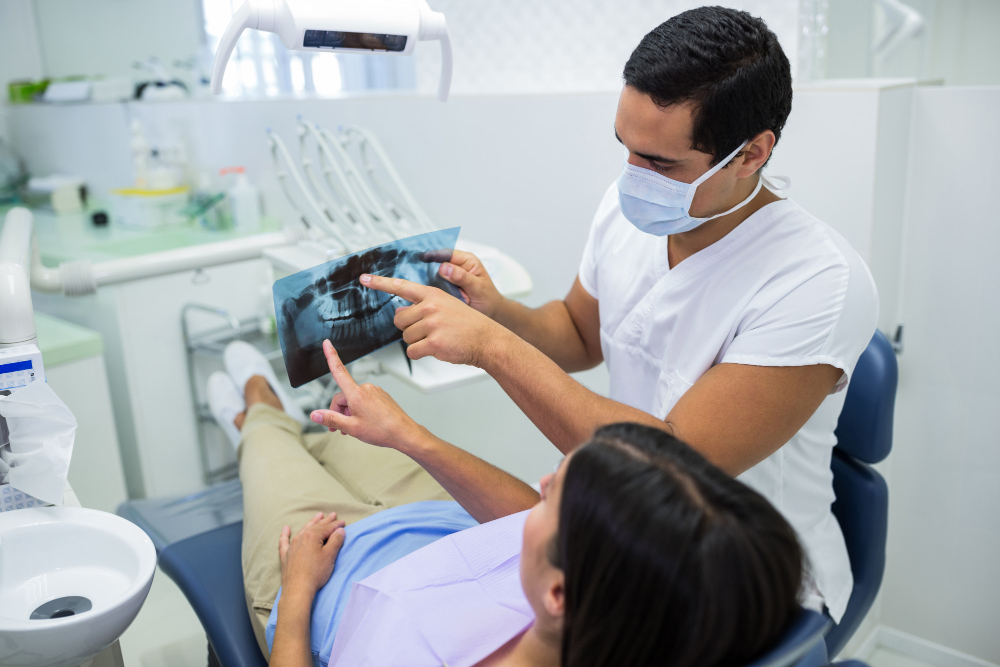
A wisdom tooth does not always need to hurt before a dentist becomes concerned about it. Dentists may discuss removal when the tooth is impacted, difficult to clean, affecting the tooth beside it or repeatedly inflaming the surrounding gum. The decision should be based on examination, imaging and individual risk rather than pain alone.
It can feel confusing when a dentist raises wisdom tooth removal even though you are not in pain.
Many people understandably use pain as their main sign that something is wrong. With wisdom teeth, however, discomfort is only one part of the picture. A tooth may be partly trapped under the gum, positioned against another tooth or difficult to clean long before it begins causing obvious symptoms.
This does not mean every symptom-free wisdom tooth needs to be removed. It means your dentist may be looking at factors that are difficult to notice without an examination or dental imaging.
No Pain Does Not Always Mean No Problem
Some wisdom teeth erupt normally and remain healthy for years. Others stay partly or completely impacted without causing immediate discomfort.
The difficulty is that problems around a wisdom tooth can sometimes develop gradually.
You may not feel anything while:
- Food and plaque collect beneath a flap of gum
- Decay begins in an area that is difficult to see
- The neighbouring molar becomes harder to clean
- Gum inflammation develops around a partially erupted tooth
- An angled wisdom tooth sits against the tooth in front
A dentist therefore looks beyond whether the area hurts on the day of your appointment.
If you have been told that a wisdom tooth should be monitored or considered for removal, it is reasonable to ask what your dentist has actually seen and what concern they are trying to prevent.
The Position of the Tooth Matters
Wisdom teeth develop at the very back of the mouth, where there may not be enough space for them to emerge in a normal position.
A tooth may be:
- Fully erupted and reasonably easy to clean
- Partly visible through the gum
- Angled towards the neighbouring molar
- Positioned horizontally
- Completely trapped beneath gum or bone
The position itself does not automatically determine whether removal is necessary.
Instead, your dentist considers what that position means for the health of the surrounding area.
For example, a wisdom tooth angled towards the second molar may create a narrow space where plaque collects. Even if you cannot feel anything unusual, that location may be difficult to brush and floss effectively.
Your Dentist May Be Concerned About the Tooth in Front
One reason patients are surprised by a recommendation for removal is that the wisdom tooth itself may not appear to be causing any trouble.
Sometimes the concern is actually the neighbouring molar.
When a wisdom tooth sits very close to the tooth in front, the area between them can become difficult to keep clean. Depending on the position, your dentist may be watching for decay, gum changes or damage affecting the adjacent tooth.
This matters because the second molar is usually an important functional tooth.
A discussion about wisdom teeth extraction Oakleigh South may therefore be less about treating current pain and more about what the dentist can see developing around the wisdom tooth and nearby structures.
Partially Erupted Wisdom Teeth Can Be Difficult to Clean
A wisdom tooth does not have to be completely buried to create problems.
Partially erupted teeth can sometimes leave a small section of gum covering part of the crown. Food debris and bacteria may become trapped underneath this area.
You may notice nothing between episodes, which is one reason patients sometimes question whether treatment is really necessary.
Other people experience occasional:
- Tenderness at the back of the mouth
- Swelling around the gum
- An unpleasant taste
- Food trapping
- Bleeding when brushing
- Difficulty cleaning the area
These symptoms may settle and then return months later.
If inflammation around the same wisdom tooth keeps recurring, your dentist may discuss whether continuing to monitor the tooth remains appropriate.
Dental X-Rays Can Show Things You Cannot Feel
Your dentist may recommend dental imaging when the position of a wisdom tooth cannot be understood from looking inside the mouth alone.
An X-ray can help show:
- The direction the tooth is developing
- Whether it is impacted
- Its relationship to the neighbouring tooth
- The shape and position of the roots
- Surrounding bone
- Whether there are changes that need further assessment
This is often where the conversation becomes confusing for patients.
You may feel completely normal while the X-ray shows a tooth positioned in a way that deserves monitoring.
That still does not mean removal is automatic. Imaging gives your dentist additional information to weigh alongside your age, oral health, symptoms, cleaning access and the condition of nearby teeth.
Why a Dentist Might Suggest Monitoring Instead
Not every wisdom tooth needs immediate treatment.
If the tooth is healthy, reasonably positioned and not affecting nearby structures, your dentist may recommend continued observation.
Monitoring can include checking the area during routine dental visits and taking further imaging only when clinically indicated.
This is why asking why removal is being discussed is useful.
The answer might be:
- There is already evidence of decay
- Gum inflammation keeps returning
- The adjacent tooth is becoming difficult to maintain
- The wisdom tooth is unlikely to erupt into a functional position
- The dentist has identified another concern that needs closer evaluation
Alternatively, the dentist may decide there is currently no reason to intervene.
What Should You Ask Before Agreeing to Removal?
If you are unsure about a recommendation, you should understand the reason behind it before making a decision.
Useful questions include:
What can you see that concerns you?
Ask whether the recommendation is based on decay, gum health, tooth position, the neighbouring tooth or another finding.
Is the wisdom tooth causing damage now, or are we discussing future risk?
These are different situations and may affect how urgently treatment needs to be considered.
Can the tooth reasonably be monitored instead?
Your dentist can explain whether observation is an appropriate option in your particular case.
Would another X-ray or assessment change the recommendation?
Some wisdom teeth require more detailed imaging depending on their position.
What are the risks of leaving it alone?
Understanding the potential downside of monitoring can help you make a more informed decision.
Patients from Clayton South who want an assessment can attend our nearby Clayton South dentist location page for information about travelling to Mary Dental and the dental services available from our Oakleigh South clinic.
What If the Wisdom Tooth Suddenly Starts Hurting?
A wisdom tooth that has been quiet for a long time can sometimes become painful when the surrounding gum becomes inflamed, food becomes trapped or another problem develops.
Contact a dentist if you notice:
- New or increasing pain
- Swelling around the back of the mouth
- Difficulty opening your mouth
- Pain while chewing
- Persistent unpleasant taste
- Facial swelling
- Feeling generally unwell alongside dental swelling
If symptoms become severe or develop quickly, an urgent dental assessment may be more appropriate than waiting for a routine appointment.
The cause still needs to be assessed rather than assuming that every episode of wisdom tooth pain requires extraction.
What If You Feel Nervous About the Procedure?
Sometimes the objection is not really about whether the tooth should come out. It is about what removal might involve.
Patients often worry about:
- Being awake during the procedure
- Whether extraction will hurt
- Recovery afterwards
- Swelling
- Eating after treatment
- Sedation
- The position of the roots
Tell your dentist what concerns you before making a treatment decision.
Depending on the complexity of the extraction and your individual circumstances, your dentist can explain the anaesthetic approach and discuss available sedation options where appropriate.
Understanding what is actually planned can be very different from imagining the worst-case stories you may have heard elsewhere.
Getting Another Opinion Is Reasonable
If you have been told that an asymptomatic wisdom tooth should be removed and you remain uncertain, it is reasonable to seek clarification or another professional opinion.
Bring any recent X-rays or treatment information with you if possible.
A second dentist can review the tooth position, surrounding tissues and available imaging and explain whether they agree that removal should be considered.
The goal is not to find someone who automatically recommends or rejects extraction. It is to understand the clinical reasoning behind the recommendation.
Patients looking for a nearby Clayton South dental clinic can arrange an assessment at Mary Dental if they would like their wisdom teeth examined or want to discuss an existing recommendation.
The Decision Should Be Based on More Than Pain
Pain is important, but it is not the only way a wisdom tooth can signal trouble.
A dentist may discuss removal because of the tooth’s position, repeated gum problems, cleaning difficulty, decay or concern about neighbouring teeth. In other cases, continued monitoring may be appropriate.
The useful question is not simply, “Does it hurt?”
It is, “What is happening around this wisdom tooth, and what are the reasonable options from here?”
A clinical examination and appropriate imaging can help answer that question before any decision about removal is made.
Disclaimer: This article provides general educational information about wisdom teeth and does not replace individual dental advice. Whether a wisdom tooth should be monitored or removed depends on its position, surrounding tissues, symptoms, imaging and other clinical factors. Speak with a qualified dentist for assessment and advice relevant to your circumstances.
 Dr Mariana Habil
 Schedule Your Appointment Today! Ready to achieve your Best Smile?
Contact our clinic to discuss available dental services — consultation required.(03) 8518 6844